Tipping Point
We all want instant gratification when it comes to planted aquariums, but unfortunately that is never an option. Many times, you have this grand idea in your mind and you want your tank to look exactly a certain way right from the jump and get discouraged when they do not. Fortunately, this does not mean you have done something wrong, just the opposite. When we start a planted tank, there is one thing to keep in mind: for a period of 1-3 months, varying on your maintenance regime, your tank will go through what we call the “new tank syndrome” phase. What this means is that your tank is fresh, things have not settled in and there are an abundance of issues that will arise and you have to identify what these issues are and how you can combat them.
I am quite certain that 99% of people who have started a tank have encountered one of the top 3 “new tank syndrome” issues that I will cover and trust me, they can be extremely annoying. Even now, I still go through these phases and have to combat algae of different types in my tanks, both new and old.
Diatoms
This is the #1 most frustrating and puzzling issue when creating a new planted aquarium. This form of algae does not appear right away, sometimes between 1-2 weeks of a tank being setup and there is little you can do to prevent this from happening. The main cause of diatoms is an unbalanced ecosystem and lack of beneficial bacteria in a new tank; as well as an abundance of silicates in the water. This, paired with excessive and too bright of a light can be a recipe for disaster, but only for a specific amount of time as this phase of your tank will not last forever, especially if you do the required steps to minimize it.
Manually remove as much of the diatoms as you can - using a tooth brush is a great tool to gather as much as you can and brush the hardscape where the diatoms will also be.
Lower your light intensity and photo-periord. Almost all modern LED lights can be adjusted on a timer and how bright they are. Start with 5-6 hours of light a day and run your light at about 30% of its maximum brightness. As the diatoms begin to dissipate, you can slowly increase your light brightness by 10-15% a week until your desired brightness for your plants.
WATER CHANGES! - This is a must either one large one a week (90%) or multiple smaller water changes throughout the week. This step is crucial in removing as much diatoms as you possibly can. Whatever you manually remove with your hands or whichever you choose to use, you have to vacuum out as much of the diatoms that are loose or floating in the water. The more you can do the better, trust me.
Plant options - Make sure you choose a selection of plants that grow fast and can absorb a lot of excess nutrients in the water column. Avoid buce and other delicate species as they will attract more algae as they are slower to adapt to changes in the tank and ultimately melt away.
Patience and time is your biggest ally during this period and just know, diatoms will not last forever. Once your tank becomes biologically stable, the beneficial bacteria built up both in your filter and the substrate will naturally cause the diatoms to disappear. This may take between 3-6 weeks depending on your maintenance regime, but it will pass and you can begin focusing on the next stage of your planted tank.
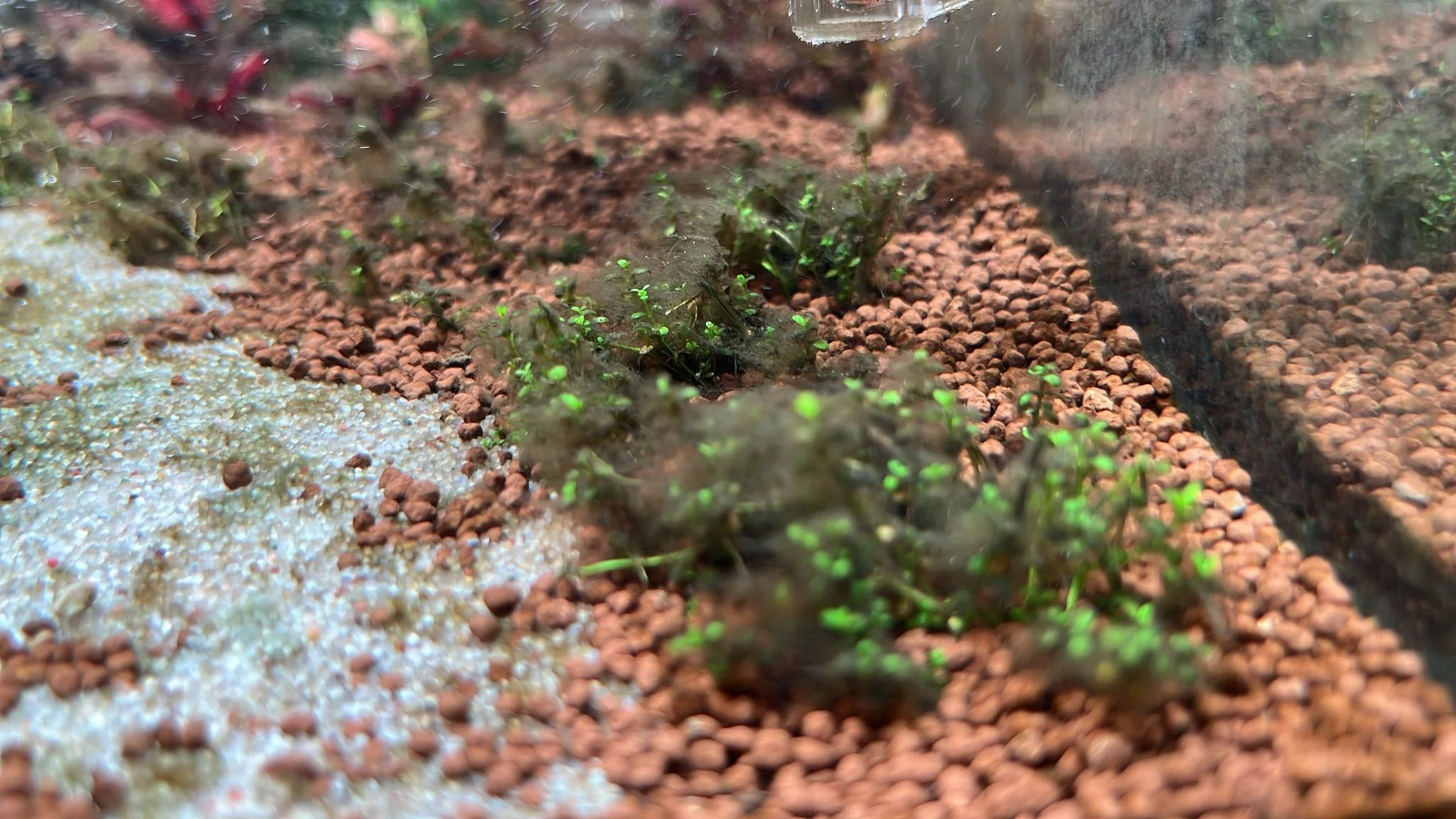
Diatoms in a newly planted aquarium